Author Archives: Jasper Bergink

Shawn Achor and the happiness advantage

This post was first published on the blog of TEDxAmsterdam. TED’s library contains about fifty talks on happiness. After the post about the flow of Mihaly Csikszentmihalyi, this is the second article in my series of articles under the title TED & Happiness. In this talk, I want to introduce Shawn Achor, positive psychologist and happiness researcher. His message is simple: happiness works. With humor and self-mockery, he reveals how our mental well-being is linked to a positive outlook on life.

A positive outlook

Shawn Achor

Shawn Achor, source: Good Think inc.

Shawn Achor begins his twelve minute happy rollercoaster ride with a simple anecdote illustrating how fundamental optimism is for our happiness. Seven-year-old Shawn was a reckless little boy. Playing war, he happened to throw his five-year-old sister Amy from her bed. Tears began to fill her eyes. But he managed to turn the situation around with: “Amy, you landed on all fours. That means… you must be a unicorn!” he said, keeping her calm and avoiding being punished by his parents.

The mechanism is simple, but it works! Changing our lens changes our happiness. Positive psychologists have shown that the way we experience our lives is a factor that explains some of the variation in our happiness (a scientifically important nuance – it does not directly predict our happiness,  though some people, even scholars, believe that optimism always creates happiness). And a happy, positive outlook in turn has a ripple effect, making experiences of life more pleasant: the happiness advantage, as Achor calls it.

See his short pitch of the idea in this video.

Reverse the formula for happiness

Nowadays, our assumption simply is that we need to do. If we do things well, we are successful. And when we become successful, we should be happy. But there is a problem: we are never satisfied. When we reach the finish line, we move the goalposts of success, and start all over again.

Let’s take a look at an example. When we graduate, what we want is a job. When we have a job, we want a better salary. Then we want more responsibility, etc. When we have achieved a goal, we repeat this cycle and look at the next goal, thus continuously pushing success towards a horizon we can never reach.

Achor asks us to reverse the formula. What if we reach success when we are happy? What if we work well, because we are happy? And what if it is happiness that inspires productivity instead of the other way around?

The happiness advantage: accomplishment & gratitude

Happiness starts with simple things. A feeling of accomplishment. Learning, creativity and developments. But above all: gratitude with the achievements of every little day.

Achor has a simple recipe for that. Spend two minutes a day for three weeks thinking about optimism and success. Everyday, write down three new things you are grateful for. If you do that for three weeks, it will have a lasting effect.

That’s the happiness advantage.

Thanks to Tori Egherman for editing.
My newsletter is out!

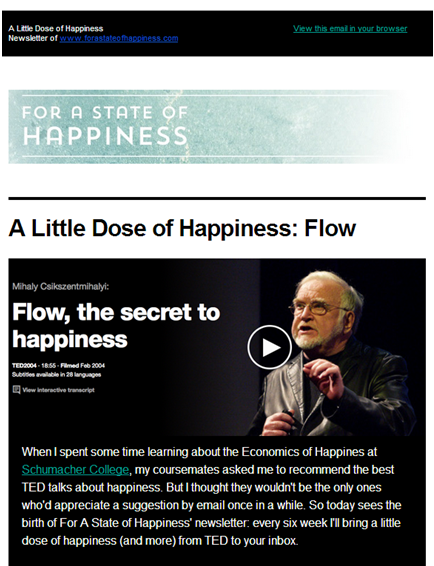
My first newsletter is out! I’ve titled it ‘A Little Dose of Happiness’, and that is exactly what I want to do every six weeks: provide you with a little dose of happiness, directly in your mailbox. If you missed the first one, write me at jasper.bergink -at- gmail.com and I’ll send you a copy.

You can subscribe to the newsletter here


A screenshot of (part of) the first edition:

FSH newsletter

The Independent’s Top 100 (of happiness, not of wealth)

Mirror, mirror on the wall, who is the richest of them all? In 2013, Bill Gates topped Forbes’ annual billionaire list, with a wealth of $77.6 bn. To compare: that is above the annual GDP of about one hundred countries on earth. His wealth is about the size of Oman’s GDP in 2012, which ranked 65th.

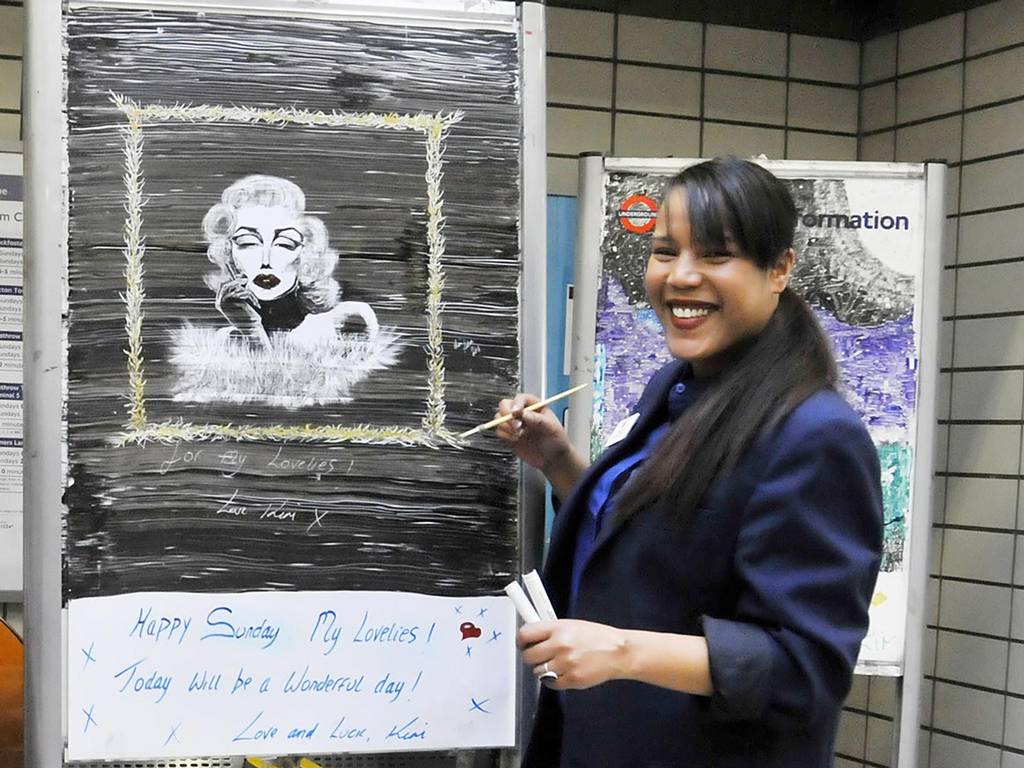
'Underground artist' Kim Kalan

‘Underground artist’ Kim Kalan. Photo via the Independent.

Fortunately life is not about money. As an antidote against Forbes-like lists of the rich & famous, the UK newspaper The Independent last week released its seventh annual Happy List. As The Independent writes, their feelgood list contains “100 people who, without thought of personal gain, give back and help others, rather than themselves.”

Again quoting the paper, the Happy List of 2014 features: “a 93-year-old who has raised more than £100,000 for Age UK by dressing as a bee; a teacher who donated a kidney to one of his pupils; the world’s oldest barmaid; the limbless Plymouth man who founded a charity to help other amputees; the London woman who founded a pop-up restaurant that employs only refugees and migrants; a couple who set up a bereavement service for parents who have lost a baby; and the heroic lollipop lady of Rhoose.”

What a great positive and inspiring message! Happiness often lies in small but significant acts of kindness. The stories of the 100 individuals making Britain a better, more beautiful and ultimately happier place. But the people on the list also offer a lot of inspiration. Their efforts are easier to emulate and more valuable to society at large than the efforts of most of the billionares listed by Forbes.

Let’s share some of the most striking stories (all bios written by the Independent). Even if they do not inspire you to raise money, fund charities or volunteer, they’ll bring a smile to your face.

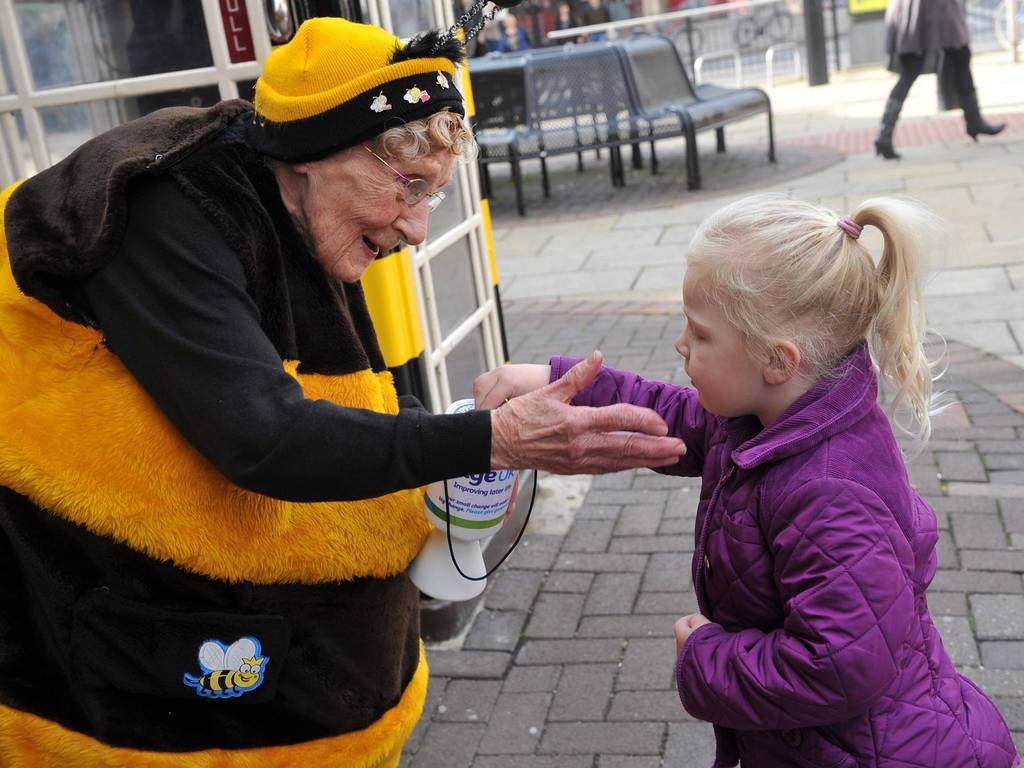
Jean Bishop. Photo via the Independent

‘Buzzing Fundraiser’ Jean Bishop. Photo via the Independent

Jodi-Ann Bickley: Happiness spreader

A tick bite led to encephalitis and a stroke, leaving this author from Birmingham unable to walk or write. She learnt to write again, and now, via her website, onemillionlovelyletters.com, spends her time writing cheering notes to all those who ask for one. And thousands do.

Jean Bishop: Buzzing fundraiser

Known as the Busy Bee throughout east Yorkshire, 93-year-old Jean began raising money for Age UK Hull 14 years ago after her husband died. She wears a bee costume (made by her daughter) while rattling her tin, and has so far collected over £100,000.

Kim Kalan: Underground artist

Kim, customer service assistant at Caledonian Road Tube station, north London, brightens up the ticket hall with whiteboard drawings. Kim draws up to two a week in her breaks or at the end of her shifts. Her Mona Lisa is among works bringing daily smiles to the faces of commuters.

Colin Marvell: Job finder

After a banking career, partially-sighted Colin, from Hatfield, Hertfordshire, was unemployed at 50. His struggle to find another job prompted him to launch Inspire4Work, a charity that helps the older unemployed gain new work. He also organises soul music events in aid of charity.

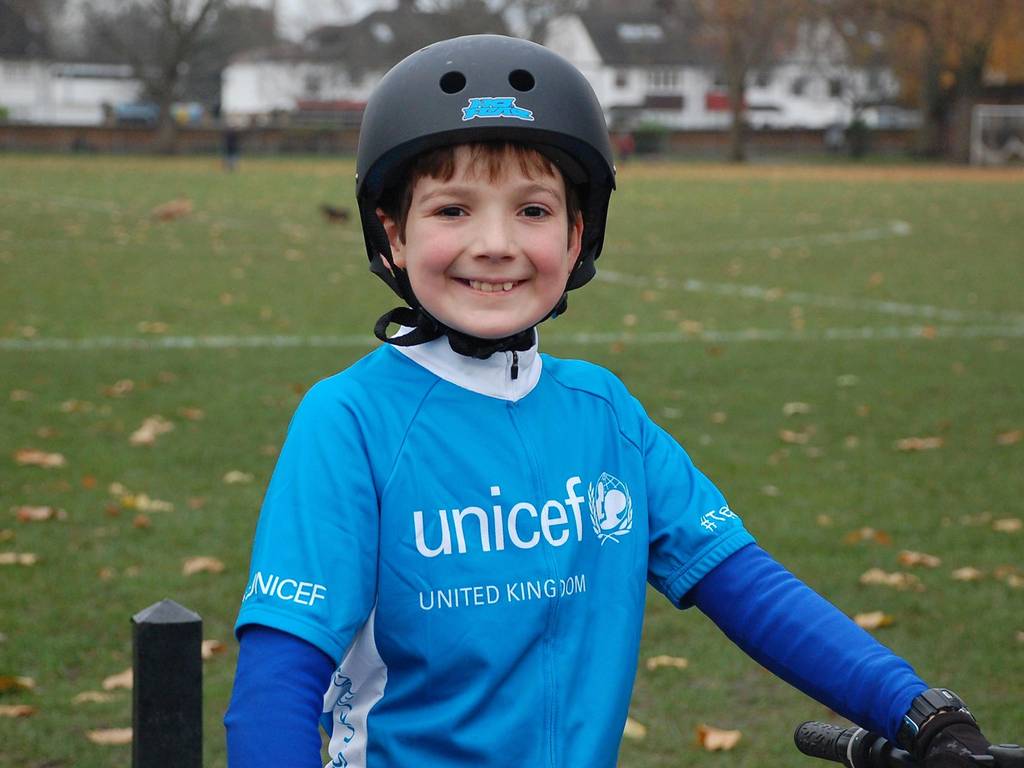
Charlie Simpson. Photo via the Independent.

‘Fundraising cyclist’ Charlie Simpson. Photo via the Independent.

Charlie Simpson: Fundraising cyclist

Charlie, aged 11, from west London has been raising money for international children’s charity Unicef since he was seven. After the 2010 Haiti earthquake, he cycled round his local Fulham park seven times. Word of this feat spread, meaning he eventually raised a massive £260,000.

Robert Williams: Kindness dispenser

Robert helped set up The Kindness Offensive, a group which carries out “random acts of kindness” across London, from delivering Christmas gifts to the underprivileged to handing out chocolate to passers-by. One nominator said Robert has “a real impact” on Londoners’ happiness.

The full Independent on Sunday’s Happy List 2014 is available here.

Felicità!

“At school, they teach you about the capital of the Netherlands, but they don’t teach you how happiness works.”

That’s one of my key messages when I spoke at Radio Alma last month. You can find the show (in Italian) online on the website of Radio Alma.

And if you want the full picture, I already wrote about the interview the week before and after my chat with hosts Rossella, Tiziana and Leandro.

Buon divertimento!

E per felicità ulteriore:

The EU elections

Sorry, for once a post that requires a specific interest – and some prior knowledge – in EU politics. No worries, next week I’ll talk about happiness again.

EU elections! After weeks of tensions built up, it’s over. The electorate has voted across the 28 EU countries. We don’t really know what they have said, but at least we’ll spin it in our favour.

There is a lot you can read in the result, but I would argue that the outcome – a low turnout of 43.09% and the rise of Eurosceptic and extreme right/left parties – suggest voters are not fully content with their leaders. I’ll avoid the discussion about happiness and politics today and just share five stories about the EU elections.

  • At 43.09%, the turnout is low, though marginally higher than in 2009 (43.00%). Absurdly enough, this was a reason for some EP voices to boldly claim the decline in turnout has been reversed. It is very worrisome to sustain democracy in a country like Slovakia, only 13% went to the polls. Seven out of eight simply didn’t care enough to make their voice heard! 


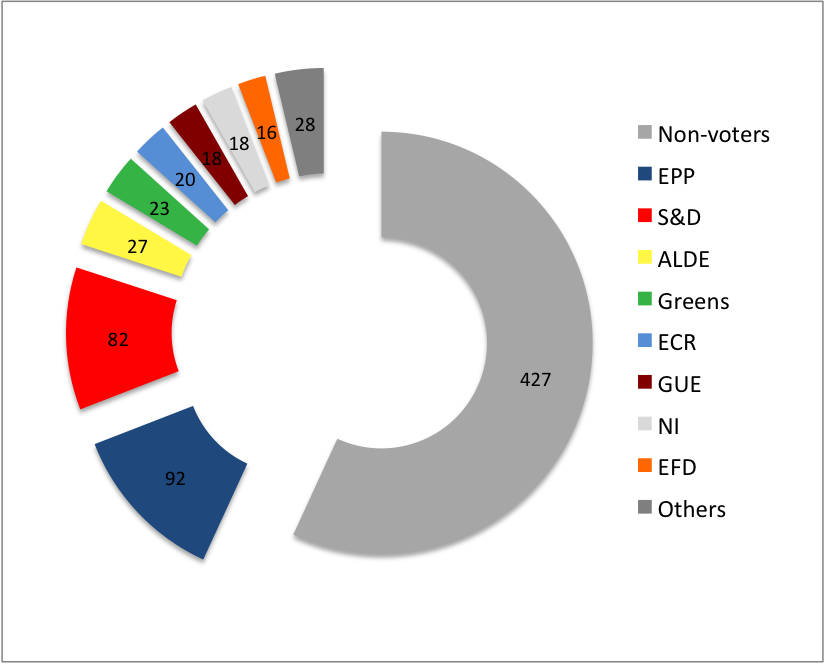
  • Let’s visualize it to better understand what the impact is that this 56.91% which is not represented in the EP.  Imagine 56.91% of the seats in the EP would not be assigned to anyone. In that case, more than half of the EP – 427 seats – would be empty. The political groups together would only fill 324 seats, the EPP with 92 being the largest. 

Non-voters

  • Another important narrative of the elections is the rise of the populists and extreme right. To me, this is too simplistic. In many countries, far right parties are doing well. Sadly, there are even enough for the Huffington post to make a list with “9 Scariest Far-Right Parties now in the European Parliament“. But not all of them are winning: Wilders’ PVV lost one seat in the Netherlands, and Jobbik in Hungary is staying at three seats. And euroskeptics come in many different flavours: UKIP (UK), AfD (Germany) and M5S (Italy) are incomparable in their opposition to the EU.


  • Altogether, the most interesting story to me is the fragementation of the EP. The slim lead of the EPP against the S&D could reinforce a strong competition. But will want to put their mark on the EP’s position. All the smaller parties will also want to be visible. This fact, and the ample presence of eurosceptics may result in some polarisation and could end the impression that all MEPs agree that whatever the problem, more Europe is the solution.


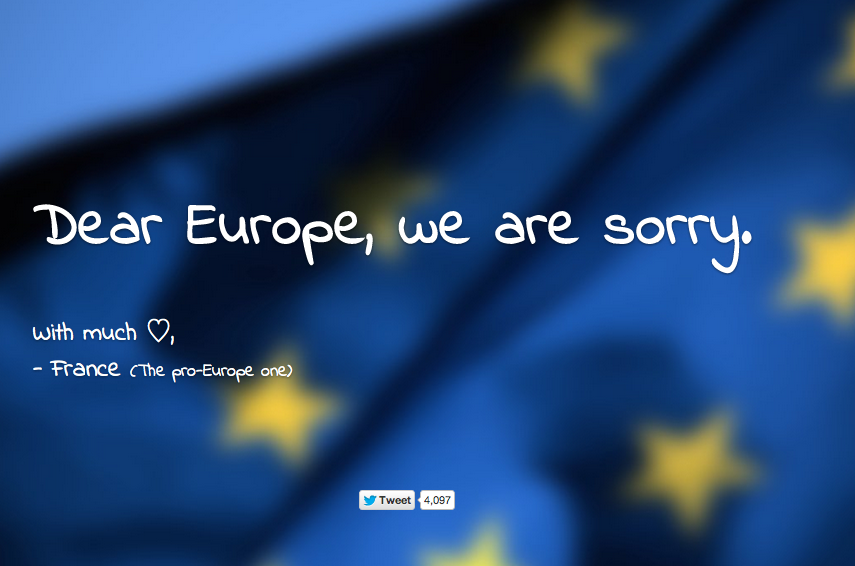
  • On the web, these are the elections of ‘Dear Europe, we are sorry‘. French people everywhere on Twitter share this to ‘apologise’ for the fact that Marine Le Pen’s Front National went from 3 to 24 seats in France. I can understand their frustration, but I don’t see the point in apologising for decisions taken by others. You don’t need to carry the weight of a quarter of the country on your shoulders. Rather than taking an apologetic stance, do something to fight bigotry and discrimination. Become member of a party. Do volunteer work to help people who are worse off. Fight for your ideals! But feeling ashamed about other people’s choices – that will never change anything.
Picture 4

Screenshot of www.deareuropewearesorry.eu

Runner’s high

A man possesses nothing certainly save a brief loan of his own body, yet the body of man is capable of much curious pleasure.

James Branch Cabell, American author, 1879-1958

As I’ve written here before, ‘flow’ is one of my favourite experiences. ‘Flow’ or ‘optimal experience’ is a term used by positive psychologist Mihaly Csiskszentmihalyi, the most boring hero I have. With the concept, he describes the feeling you have when you’re so engaged in an activity that you lose track of time and place. Concentration is intense. Your activity challenges all your skills. Your self-consciousness disappears.

Very briefly, I experience such a feeling of flow when I was running the 20 kilometers of Brussels yesterday. It was close to the half-way point in the Bois de la Cambre. I had trained in this park before, and exactly knew where the curves of the road would take me. On a bridge above the street, a DJ was playing music. I didn’t actively notice which song it was, but it fitted the rhythm of my steps. And though I already had suffered the heat before – and would still suffer it a lot more afterwards – at this point close to the 10k mark, I entered my flow and ran effortless. A large smile appeared on my face. I was euphoric.

I experienced, I like to think, a runner’s high.

A runner’s high, tells Wikipedia, occurs when people exercise so strenuously that their bodies reach a certain threshold. A switch is turned, flow is achieved. In chemical terms, it’s created by the release of endorphins during intense workouts. Endorphins reduce the sensation of anxiety and pain and cause feelings of euphoria.

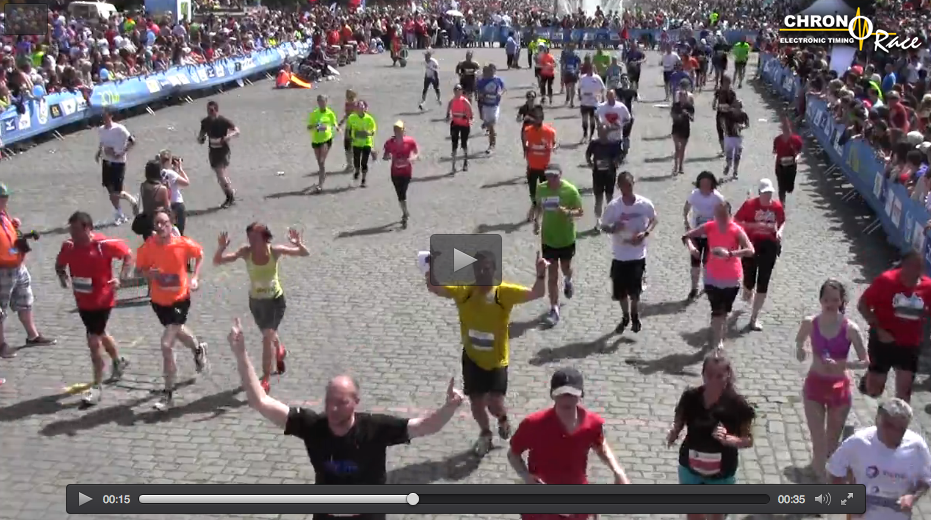
Running 20k on a warm day, like yesterday, is not fun. With a temperature above 20 degrees and a burning sun, I had to take regular breaks to get my body temperature  down (I had gotten sun burnt the day before, and still felt a bit light in my head). But when I crossed the finish line after 2 hours, 12 minutes and 19 seconds, nothing of this mattered. All suffering disappeared. I was proud. I was happy.

The body of man, Cabell said, is capable of much ‘curious pleasure’.

Crossing the finish (to the left side, in a Dutch orange shirt). Screenshot taken from a video from the site of the 20k of Brussels.

Crossing the finish (to the left side, in a Dutch orange shirt). Screenshot taken from a video from the site of the 20k of Brussels.

A EU Happiness Manifesto

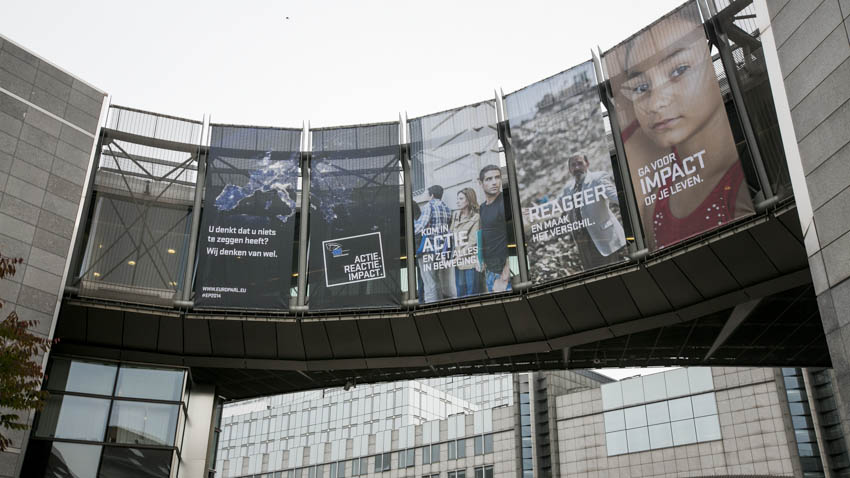
Act React Impact for EU Happiness!Only ten days to go until the European elections start!

From 22 to 25 May, around four hundred million voters from Lisbon to Tallinn and from Dublin to Nicosia can vote for the European Parliament. In a year still tainted by the economic crisis, employment and growth promise to one of the most important topics for those people who bother to vote. The campaign is going slow, and at least on the EU level, it is hard to see a clear difference between the lead candidates.

But why is there no debate about happiness in the EU elections?

An economic crisis as the one we’re now gradually recovering from is not only pain. It is also an opportunity to reflect on our policies: never waist a good crisis, as the cliché goes. What is it that really matters to people in Europe? A job and a good income are important. But ultimately, these are a means to an end: living a good life. Well-being, or happiness if you want.

So can’t EU politicians do more for our well-being?

I am certainly convinced they can. And that’s why I call on all candidates, across the entire EU, to campaign on this topic: Gross European Happiness. And my points are the following:

Gross European Happiness (GEH) as a key concept

The most important indicator in the EU is Gross Domestic Product (GDP). The Commission collects stats about economic growth, business confidence and consumer confidence every month. GDP is important, but has is limits. Robert F. Kennedy once said that GDP measures everything in life, except that what makes it worthwhile. As an accounting system, GDP has failed. Wouldn’t it be better to focus on people’s quality of life instead? As I’ve argued before, the EU should to use Gross European Happiness (GEH), next to GDP. GEH would be based on Gross National Happiness (GNH) in Bhutan, and help informing EU policies.

Development of a GEH scoreboard

GEH is a lot more complex than GDP. But the Commission has a lot of highly skilled staff. They should be able to grasp what GNH means for the Bhutanese and translate it to European values. They can develop a methodology for GEH, that understand how our economic conditions, community life, free time, (mental) health and education all contribute to well-being. This can be developed into a scoreboard, providing a benchmark on how countries perform – and where they can improve.

A Commissioner for Well-Being

At the moment there are 28 Commissioners, covering a wide spectrum of topics.In one way or another, all these portfolios affect well-being and GEH; for economic affairs, social affairs, health, environment and education the case is most clear. But these are various silos. To effectively make GEH a reality, we need a strong political steer. Therefore, we need a Commissioner for Well-Being to oversee the GEH process, and also to ensure well-being is fed into all other policies.

We could even grant their own Directorate-General; with an administrative French term, it could have DG BONH (Bonheur) as it’s acronym (a bureaucrat is nothing without an acronym). Commission services already assess the impact of their policies on human rights before a proposal is adopted: why not add a ‘happiness impact assessment’ to study whether new policies actually contribute to our well-being?

Education, education, education

Happiness does not only depend on the circumstances you’re in, but also on the way you deal with them. At school, we learn many valuable things, like math, science and history. Though we spend twenty years in education, we learn little about ourself. How does happiness work? In what ways do our brain and our behaviour function? How can you recognise, and prevent, mental health problems? These are important life skills, and schools should pay attention to them. The EU, for instance, could promote the inclusion of the Five Ways to Well-Being into school curricula.

Tell your candidate to work for Gross European Happiness

In 2009, the Commission adopted a policy paper on ‘GDP and beyond. Measuring progress in a changing world‘. Since, it has been silent. It’s time to chance that. Go vote. Tell your candidate what you expect from the EU. Tell them to work for Gross European Happiness. It’s about time that the EU honours the EU Treaty’s line that the Union’s “aim is to promote peace, its values and the well-being of its peoples”.

Serious play & Happy gin-tonics

Last Saturday, I found myself back with a gin-tonic in my hand, dancing to Pharrell’s Happy in the middle of Place Flagey. It was 14.30 in the afternoon, and almost got hit by the vehicles cleaning up the square after the market. Why did that happen?

And as a second question, why did I title this post Serious Play?

I’ve already written before about Happy – the global of hymn of happiness, as I see it – and the many local versions that people all around the globe have made. And after seeing one of not-too-impressive versions from Brussels, a friend of mine decided to recruit some people as well.

Honestly, the result is not amazing. As our videographer backed out, it was shot with a shaky iPhone. All shots were fully spontaneous, without script or storyboard. Though the gin-tonics did stimulate us to move, I’d argue the footage is not suitable for the Internet. (Even in the age of selfies and excessive social media use, real life is enough. Experiences still matter if nobody has given a like for it).

So why am I still writing about this? Well, I think the example serves as an illustration of the importance of play as a force for creativity and joyfulness.

Playfulness stimulates creativity
Being playful is good for our creativity. Children generally are better at this than adults. Men never seize to be children and often are more playful than women. Play is great, because it helps us use our imagination. And those skills are useful to solve problems, as tinkering and experimenting come with play. Unfortunately, this is a skill we tend to lose as we grow up, by saying play is just for children.

As Stuart Brown says, play is a must for creative and problem-solving jobs like designers and engineers (The famous TED talk by Ken Robinson on how schools kill creativity is also nice to watch in this context).

Playfulness stimulates joyfulness
Play is fun. Once you stop being embarrassed about dancing on a square, you enter the realm of happiness. Once we decided to be ridiculous, I saw my fellow dancers smiling all the time (it’s not without a reason that ridiculous means ‘to be made fun of’).

And it’s even more than just being joyful in the here and now. It’s proven that play is important for mental health! Psychologists believe (also referenced by Brown) that there some murder cases are associated with ‘play deprivation’. That is, the repression of play by parents can result in depressions or even criminal behaviour.

So to those who say that one who dances in the square is not sane, I will say that insanity must be preferred over repression.

Play on!

Condivivere, sharing a life of happiness

Update: the show is available here now (in Italian)

And? Did you tune in to Radio Alma last Monday to listen to my chat about happiness with the hosts Rossella, Tiziana and Leandro?

You might have missed it, or you may not speak Italian, so let me share some reflections. To start, radio is good fun. It’s a very interesting medium. Talking on the radio really forces you to formulate your message in small bits and pieces as part of the dialogue with your host. I haven’t heard myself back yet (I’ll post the show once it’s available), but I think I managed to bring forward my message.

There are two points I wanted to raise. First: there are many things we can do in our daily life to consciously experience personal happiness. Many people think happiness is something magical or secretive. For me, the secret to happiness is that there is no secret. I spoke a bit about the five ways to well-being, as developed by the new economics foundation. Understanding where happiness comes from can help us to stand still for a moment, like I did in front of a traffic light in London, to look around to be amazed of the speed and hurry of all those around us. Often we’re too much in a hurry to realise we are happy!

Second: we briefly spoke about Gross National Happiness (GNH) as a tool to translate these lessons about happiness to the level of society. Countries are prone to focus on economic growth. But maybe GNH is what they should strive for, if they want to creative a meaningful community in the long run.

I also had an interesting exchange of ideas with the second guest on the show, a singer-songwriter and poet called Leopoldo Verona. He spoke about ‘living life in the now’ and about ‘a sense of freedom’ as factors linked with happiness. It made me think about freedom: do we know how to use our freedom? Do we freely choose to spend our time playing silly games on our smartphones or eating fastfood? How can we motivate ourselves to use our freedom in a way that we enjoy more deeply, for instance by writing blog posts or poems and by cooking a so much more tasty asparagus risotto?

Maybe happiness is knowing how to use your freedom in a meaningful way.

But the main thought I took home from the conversation with Leopoldo is a very simple one. He is a poet, and poets have the great skill to forge words together, creating something bigger than the sums from their parts. For Leopoldo, happiness is about living fine moments with those around us. He epxresses that in one word, putting together ‘share’ (condividere) and ‘live’ (vivere) in condi-vivere.

Simply put, happiness is sharing life.

But everything sounds better in Italian: la felicita è condivivere.

radioalma

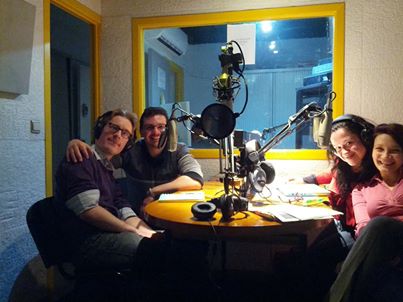
In the studio, with Leandro, Rossella and Tiziana.

Tune in to Radio Alma tonight!

Update: the show is available here now (in Italian)

Today is going to be an exciting day! I’ll be on Radio Alma to speak about happiness, well-being and my discoveries for For A State of Happiness. The show starts at 21, is in Italian and is called ‘I colori dell’anima‘ (the colours of the soul).

The transmission can be followed on 101.9 FM in Brussels or in streaming online from 21.00 to 22.00 (click the link ‘Radio Alma en direct’).

How do you prepare for such a show? Well, I won’t reveal yet what I will be talking about. Evidently, it will be close to the topics of exploration of For A State of Happiness. I’ll cover both the personal and the policy side of happiness and well-being.

How do you prepare for a show on a topic as large as happiness? As there are so many interesting angles to it, I asked my friends what questions about happiness they would like to have answered. I won’t be able to address all of them, but they do make me reflect for the show. These are some of the questions I received:

  • Does money or wealth actually make you happy?
  • Does happiness mean the same thing across cultures?
  • Do people have to be unhappy before they can experience happiness?
  • Can we all be happy one day?
  • Is happiness contagious?
  • How can we be happy if everybody around us spends their time complaining about everything?
  • Which factors determine happiness?

I won’t answer them for now… that’s for when I’m on air and for a follow-up blog afterwards.

But thanks a lot to Jakob, Otman, Fisnik, Katia and Isabelle for putting them out there.

Also have a question about happiness? Leave a comment and I’ll (happily!) share my thoughts. And of course, if you speak Italian, do tune in to Radio Alma at 21.00 today!